
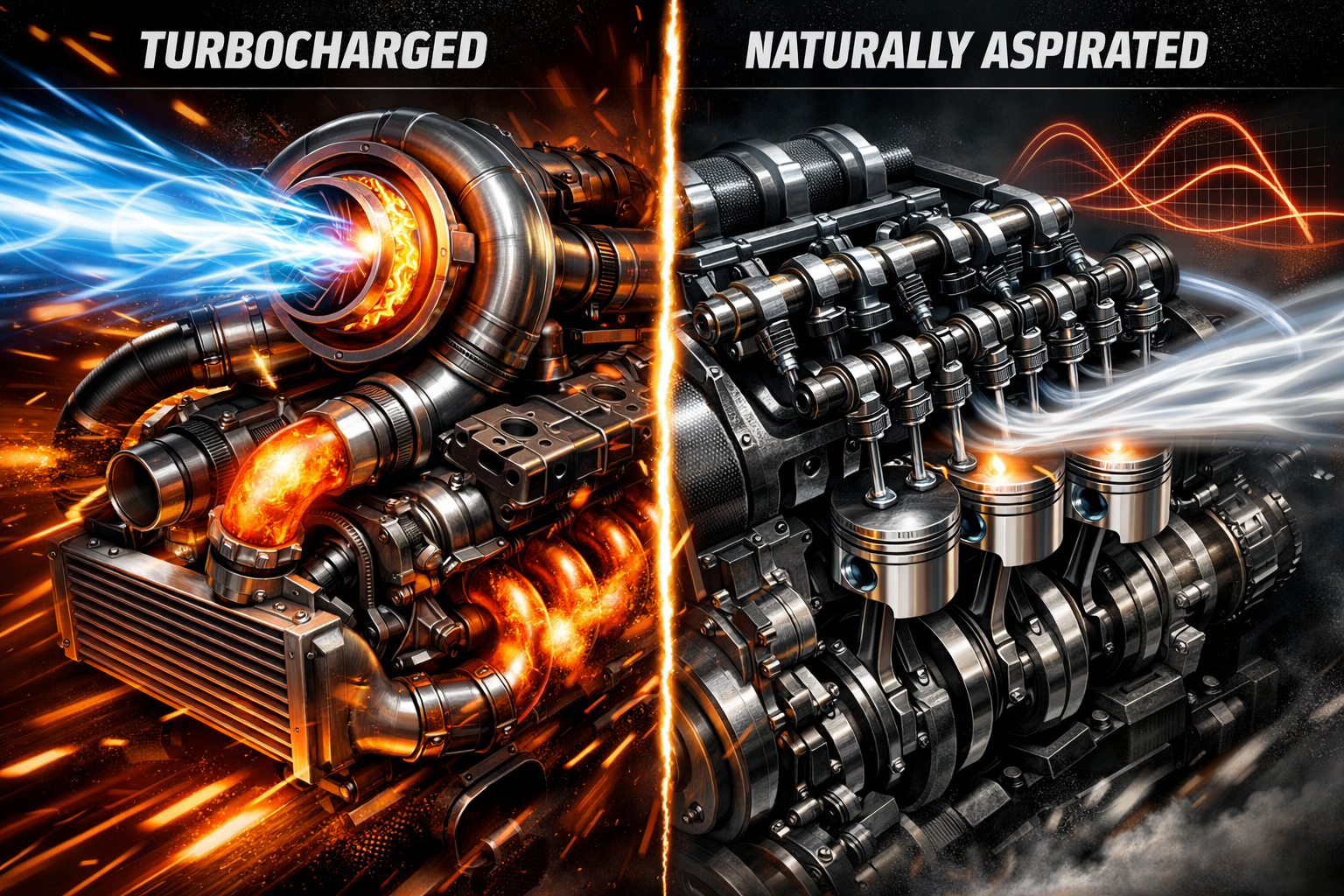
When it comes to sports cars, engine design is one of the most debated topics among enthusiasts. Two main types dominate the discussion: turbocharged (turbo) engines and naturally aspirated (NA) engines. Both have their fans, unique advantages, and quirks. If you’ve ever wondered which is better for your dream sports car, here’s a deep dive.
A turbocharged engine uses a turbocharger, which is essentially a small turbine powered by exhaust gases. This turbine compresses air entering the engine, allowing more oxygen to mix with fuel, resulting in a power boost without increasing engine size.
Key Benefits of Turbocharged Engines:
- Higher Power Output: Turbos can significantly increase horsepower and torque. This makes smaller engines feel like bigger, more powerful ones.
- Better Fuel Efficiency (in some cases): Modern turbo engines can provide more power with less fuel, especially at lower speeds.
- Performance Flexibility: Turbos excel in acceleration and mid-range torque, ideal for overtaking and spirited driving.
Drawbacks:
- Turbo Lag: A brief delay occurs before the turbo delivers its full boost.
- Complexity & Maintenance: More moving parts mean higher potential for repairs.
- Heat Management: Turbo engines run hotter and often require better cooling systems.
Popular Turbocharged Sports Cars:
- Porsche 911 Turbo
- Nissan GT-R
- Audi RS series
What is a Naturally Aspirated Engine?
Naturally aspirated engines draw air into the combustion chamber without any forced induction. They rely purely on atmospheric pressure for air intake, which means the engine’s power is determined by its size and design.
Key Benefits of Naturally Aspirated Engines:
- Immediate Throttle Response: No turbo lag—power delivery is linear and predictable.
- Simplicity: Fewer parts mean less maintenance and generally higher reliability.
- Iconic Engine Sound: Many car enthusiasts prefer the pure, raw sound of NA engines.
- Consistent Performance: NA engines are less affected by extreme temperatures compared to turbo engines.
Drawbacks:
- Lower Peak Power: Without forced induction, maximum horsepower is limited.
- Less Torque at Low RPMs: NA engines often require higher revs to reach their performance sweet spot.
Popular Naturally Aspirated Sports Cars:
- Ferrari F8 Tributo
- Lexus LFA
- Porsche 911 GT3
Head-to-Head Comparison
| Feature | Turbocharged Engine | Naturally Aspirated Engine |
|---|---|---|
| Power Output | High, especially in small engines | Moderate, depends on displacement |
| Throttle Response | Slight delay (turbo lag) | Instant and linear |
| Sound | Louder under boost, can be muted | Crisp, raw, and iconic |
| Maintenance | Higher due to complexity | Lower, simpler design |
| Driving Feel | Strong mid-range torque, fast acceleration | Smooth power curve, engaging high-rev driving |
| Fuel Efficiency | Can be efficient if driven gently | Generally less efficient for same power output |
Which One Should You Choose?
The choice depends on driving style and preference:
- Turbocharged Cars: Perfect for those who love high power and modern tech, want impressive acceleration, and are okay with potential maintenance costs. Ideal for city driving and long-distance trips where mid-range torque matters.
- Naturally Aspirated Cars: Great for purists who love linear power delivery, engine sound, and high-rev thrills. They provide a more engaging and mechanical driving experience, often preferred on tracks.
The Modern Trend
In the past decade, turbocharged engines have become more prevalent due to stricter emission regulations and the demand for high power without increasing engine size. However, NA engines remain iconic in high-end sports cars, often reserved for models where driver engagement and mechanical purity are prioritized.
Some manufacturers are even experimenting with hybrid systems that combine the instant response of NA engines with turbocharged or electric boost, giving the best of both worlds.
Final Thoughts
Both turbocharged and naturally aspirated engines have their unique charm. Turbo engines deliver sheer performance and versatility, while NA engines offer pure, unfiltered driving excitement. If you’re choosing your next sports car, consider your driving style, maintenance preferences, and love for engine sound—and the perfect ride will reveal itself.