
There is a specific kind of tiredness that comes at the end of a real adventure. Not the grey, empty exhaustion of a long week at the office or the drained feeling after too many late nights. This is a different kind of tired entirely. Your legs are sore, your pack is lighter than it was at the start of the day, your clothes have seen better days, and somewhere between your boots and your shoulders every single muscle has a story to tell. But your mind is clear and your spirit is full in a way that ordinary days almost never produce.
This is what adventure travel does. It puts you in situations that are challenging enough to demand your full presence and your full effort. It takes you to places that have not been designed for your comfort. It asks things of you that your regular life does not ask. And in return it gives you something that no hotel breakfast buffet or resort pool can come close to providing. It gives you a direct, unfiltered experience of being alive in a remarkable world.
Adventure travel has grown enormously as a category over the past two decades. More people than ever are choosing holidays that involve physical challenge, unfamiliar environments, and genuine uncertainty over those that offer only comfort and predictability. The reasons for this growth are worth understanding because they tell us something real about what people are looking for in their lives and why the adventure travel experience meets those needs in ways that conventional tourism does not.
This blog is going to cover adventure travel honestly and thoroughly. What it actually is, the different forms it takes, why people are drawn to it, the destinations that offer the most remarkable experiences, how to prepare properly, the risks and how to manage them, and what the experience actually changes in the people who pursue it.
What Adventure Travel Actually Is
Adventure travel is not one specific thing. The umbrella covers an enormous range of activities, environments, and levels of challenge, from a beginner’s weekend hiking trip in the hills to a multi-month expedition across a remote mountain range.
At its core, adventure travel involves travel that includes a meaningful element of physical activity, engagement with natural environments, and some degree of genuine challenge or uncertainty. The challenge is what distinguishes it from conventional tourism. A beach holiday is relaxing but there is no meaningful challenge involved. An adventure travel experience asks something of you and the asking is part of what makes it valuable.
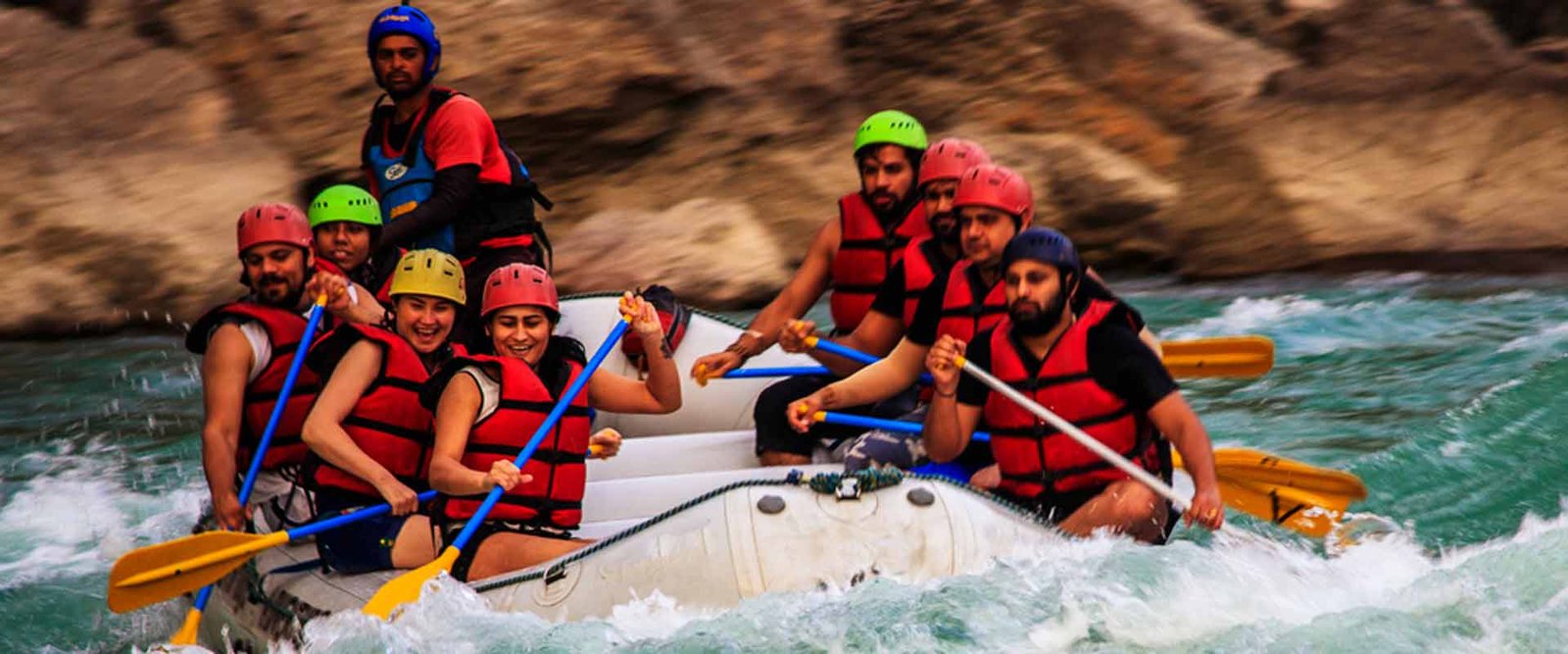
The activities that fall under adventure travel include trekking and hiking in mountain or wilderness environments, rock climbing, mountaineering, white-water rafting, kayaking, cycling expeditions, wildlife safaris in remote areas, diving and snorkelling in challenging conditions, surfing, paragliding, motorbike touring through difficult terrain, winter expeditions involving snow and ice, desert crossing, and jungle exploration among many others.
Adventure travel can be physically intense or relatively moderate depending on what you choose. A beginner trekker doing a three-day route in a well-established trekking area is engaging in adventure travel. So is an experienced mountaineer attempting a technical route on a high-altitude peak. The common thread is engagement with a genuinely challenging environment and the willingness to move outside your comfort zone rather than a specific level of intensity or risk.
Adventure travel is also increasingly distinguished from extreme sports by its emphasis on the journey and the environment rather than only the activity. The most meaningful adventure travel experiences are those where the landscape, the culture encountered along the way, and the internal experience of moving through challenging terrain are as central as the physical activity itself. The trek is not just about the destination peak. It is about every day of walking, every camp at altitude, every conversation with a fellow traveller, and every moment when the landscape makes you stop and simply look.
Why People Are Drawn to Adventure Travel
The growth of adventure travel as a category reflects something real about what a significant number of people find missing from their daily lives and are actively seeking through travel.
Modern life in urban environments is comfortable in material terms in ways that previous generations could not have imagined. Food is always available. Temperature is controlled. Physical danger is almost entirely absent from most people’s daily experience. Communication is instant. Entertainment is limitless. Convenience has been optimised to an extraordinary degree.
And yet many people who live this materially comfortable life describe a persistent sense that something is missing. A sense of aliveness, of genuine engagement, of the satisfaction that comes from doing something genuinely difficult and succeeding. Psychologists who study wellbeing consistently find that the experiences people describe as most meaningful and most satisfying in their lives are rarely the most comfortable ones. They are the ones that demanded something real, that involved genuine difficulty, and that produced a sense of achievement earned through effort.
Adventure travel provides this in a concentrated, intense form. When you are six hours into a mountain trek, far from any road, with another three hours before camp, and you are genuinely tired and the weather is changing, you are not thinking about your inbox or your mortgage or the meeting you have on Thursday. You are completely and entirely present in the moment you are in. This kind of full presence is something that most modern environments make extremely difficult to access. Adventure travel makes it almost unavoidable.
The social dimension of adventure travel is also a significant draw. Shared challenge creates bonds between people with remarkable speed and depth. Strangers who spend a week on a difficult trek together, who help each other through hard sections, who share camp food and stories around an evening fire, who support each other through exhaustion and difficult weather, develop connections that feel genuine and lasting in ways that socialising in comfortable settings rarely produces as quickly. The vulnerability that challenge creates opens people to each other in ways that ordinary social interaction does not.
The Destinations That Define Adventure Travel
Certain places have become synonymous with adventure travel because of the combination of remarkable landscapes, access to challenging activities, and the culture of exploration that has developed around them over time.
The Himalayas are the spiritual home of trekking and mountaineering adventure. The sheer scale of the world’s highest mountain range, the altitude challenges it presents, the remote villages accessible only on foot, and the cultural richness of the communities that live in its valleys make it one of the most rewarding adventure destinations on earth. In India, the Himalayan states of Uttarakhand, Himachal Pradesh, Sikkim, and the territories of Ladakh and Spiti offer trekking experiences that range from relatively accessible multi-day routes to serious high-altitude expeditions that require weeks of preparation and significant physical conditioning.
Ladakh has become one of the most iconic adventure travel destinations in Asia, drawing motorcyclists, trekkers, and mountain bikers from across the world. The stark, high-altitude landscape, the Buddhist monasteries perched on dramatic cliff faces, the mountain passes that top five thousand metres, and the almost alien quality of the terrain create an experience that is genuinely unlike anywhere else in the world. The roads of Ladakh, including the famous Manali to Leh highway, are among the most dramatic and most demanding riding routes available anywhere.
Nepal remains one of the most significant adventure travel destinations globally with the Everest Base Camp trek and the Annapurna Circuit among the most famous trekking routes on earth. The combination of extraordinary mountain scenery, well-established trekking infrastructure, rich Sherpa and Gurung culture, and the genuine physical demands of high-altitude trekking make Nepal a destination that draws adventure travellers back repeatedly.
Patagonia in South America, spanning the southern reaches of Chile and Argentina, offers some of the most dramatic wilderness trekking available in the world. The Torres del Paine circuit, the trekking routes around Fitz Roy, and the remote glacial environments of Chilean Patagonia provide an experience of wild, unspoilt landscape that has few parallels. The weather in Patagonia is famously unpredictable and the wind that blows across the open steppe can be genuinely extreme, adding a dimension of real challenge that experienced adventurers cite as part of what makes it special.
New Zealand has built a global reputation as an adventure travel destination through both its extraordinary landscapes and the range and quality of adventure activities it offers. The Milford Track and the Routeburn Track are among the finest multi-day wilderness hikes in the world. White-water rafting, bungee jumping, skydiving, glacier hiking, and sea kayaking are all available at world-class standard. The country’s relatively compact geography means that multiple dramatically different adventure environments are accessible within short travel times.
Costa Rica has become the adventure travel gateway to Central America and South America for many travellers. White-water rafting on the Pacuare River, zip-lining through cloud forest canopy, surfing on both Pacific and Caribbean coasts, volcano trekking, and wildlife encounters in some of the most biodiverse ecosystems on earth are all accessible in a country that has also developed strong ecotourism infrastructure and a culture of environmental conservation.
Africa offers adventure travel experiences that no other continent can replicate. Summit Mount Kilimanjaro and you stand on the roof of Africa with a panorama that stretches to the horizon in every direction. Trek with mountain gorillas in the forests of Uganda or Rwanda and you experience something that has no equivalent anywhere else in the natural world. Cross the Sahara, cycle through East Africa, or trek in the Simien Mountains of Ethiopia for experiences that are genuinely remote, genuinely challenging, and genuinely transformative.
Preparing Properly: The Difference Between an Adventure and an Ordeal
The difference between an adventure that is genuinely wonderful and one that is genuinely miserable is often preparation. People who prepare properly for adventure travel have the physical and mental resources to meet the challenges they encounter and to enjoy the full experience. People who are underprepared find that the challenges overwhelm their capacity to cope and what should be remarkable becomes endurance.
Physical preparation is the foundation. If you are planning a multi-day trek at altitude, beginning a cardiovascular fitness programme several months before your departure is not optional. Walking with a loaded pack on varied terrain, progressively increasing both distance and elevation, prepares your body for what it will face in a way that gym workouts alone do not. Many experienced adventure travellers describe the weeks of preparation training as part of the adventure itself, a period when the upcoming journey becomes the organising principle around which fitness and capability are built.
Gear selection is an area where both over-preparation and under-preparation cause problems. Carrying too much gear is as problematic as carrying too little because the weight of your pack is something you carry every hour of every trekking day and unnecessary weight degrades the experience. Carrying too little leaves you exposed to cold, wet, or other environmental conditions that proper gear would manage. The principle of choosing fewer, higher-quality items that serve multiple purposes is almost universally endorsed by experienced adventure travellers.
Understanding the specific challenges of your destination is part of preparation that many people underestimate. Altitude sickness is a real and potentially serious condition that affects many people who ascend above three thousand metres, regardless of their fitness level. Understanding the symptoms, the acclimatisation protocols that reduce the risk, and the responses appropriate to different severity levels is essential knowledge for anyone trekking in mountain environments. Preparation for other environments, desert heat and hydration, tropical disease prevention in jungle environments, weather patterns in coastal and maritime destinations, all require destination-specific knowledge that should be acquired before departure.
Travel insurance is non-negotiable for adventure travel. Standard travel insurance often excludes the activities that adventure travellers engage in and finding a policy that specifically covers your planned activities, including emergency evacuation from remote areas, which can cost enormous sums without insurance, is an investment that no serious adventure traveller should skip.
The Risks and How to Manage Them Honestly
Adventure travel involves real risk. Acknowledging this honestly, rather than either minimising it or treating it as a reason not to pursue adventure, is the most useful approach to the subject.
The risks that adventure travel involves fall into broadly manageable categories when approached with the right combination of preparation, judgment, and respect for the environment.
Physical injury is the most common risk in adventure travel and ranges from minor blisters and muscle strains to more serious injuries from falls or accidents. Managing this risk involves building appropriate fitness before your trip, using correct technique for activities you engage in, not pushing beyond your genuine capability level, and carrying a well-stocked first aid kit with the knowledge to use it effectively.
Weather and environmental conditions are the most significant risks in most mountain and wilderness environments and are also the least controllable. What you can control is the preparation and judgment that helps you respond appropriately when conditions change. This means understanding weather patterns for your destination, having gear that handles the worst conditions you might reasonably encounter, and having the judgment to turn back or take shelter rather than pushing on when conditions deteriorate beyond what is safe.
Getting lost or disoriented in unfamiliar terrain is a risk in remote environments where trails are not well-marked. Carrying a detailed map and knowing how to use it, having a compass, carrying a GPS device for remote areas, and travelling with a reliable guide in genuinely remote terrain all reduce this risk significantly.
Medical emergencies in remote areas are the highest-stakes category of adventure travel risk because access to medical care can be many hours or even days away. Carrying a comprehensive first aid kit, having a basic wilderness first aid certification, understanding the specific medical risks of your environment, and having a clear evacuation plan and the communication tools to execute it are all part of taking this risk seriously.
The honest truth is that the risks of adventure travel, when properly prepared for and intelligently managed, are significantly lower than uninformed outside observers often assume. The vast majority of adventure travel experiences are completed safely by people who prepared appropriately and exercised sound judgment in the field.
What Adventure Travel Changes in You
Many people who return from significant adventure travel experiences describe a shift in how they see themselves and how they approach their ordinary lives. This is not just travel industry marketing language. The psychological research on challenge experiences and personal development supports it.
Completing something genuinely difficult produces a revision in how you understand what you are capable of. If you did not know whether you could trek for seven days through high-altitude terrain, carrying your own pack, managing altitude, and continuing through fatigue and difficult weather, and then you did it, you now know something about yourself that you did not know before. That knowledge does not stay in the mountains. It comes home with you and changes how you approach the next difficult thing in your life, whatever form it takes.
Perspective is another consistent gift of adventure travel. The problems and pressures of ordinary life look different after you have spent time in genuinely remote landscape where those problems have no relevance and where the only things that matter are the weather, the terrain, your companions, and the next step. This perspective is not permanent but it is real and it often provides a reset on what actually matters that carries forward meaningfully into the weeks and months after return.
Confidence of a specific and durable kind develops through the experience of succeeding in challenging environments. Not the shallow confidence of social approval or professional achievement but the deeper confidence that comes from knowing that you can endure difficulty, solve problems in demanding conditions, and keep going when you would prefer to stop. This is the kind of confidence that translates across life contexts rather than being specific to one setting.
Connection with the natural world is something that many adventure travellers describe deepening significantly through their experiences. Spending extended time in wilderness environments, moving through them at the pace at which they were meant to be experienced, develops a relationship with the natural world that is very different from the relationship available to people who experience nature only through car windows or manicured parks. This connection tends to produce stronger conservation values and a more active concern for the preservation of the places that adventure has made meaningful.
Adventure Travel in India: The Extraordinary Range Available Domestically
India is one of the richest adventure travel destinations in the world and many Indian travellers have not fully discovered what is available domestically before looking abroad.
The Himalayan region alone offers a lifetime of adventure travel experiences. The Chadar Trek on the frozen Zanskar River in Ladakh is one of the most extraordinary winter trekking experiences available anywhere. The Pin Parvati Pass trek in Himachal Pradesh is considered one of the most challenging high-altitude crossings in the Indian Himalayas. Roopkund in Uttarakhand, the Har Ki Dun valley, and the Kedarkantha summit trek are all experiences of remarkable quality and varying difficulty levels that are accessible without leaving India.
River rafting on the Ganges through Rishikesh has introduced hundreds of thousands of Indian and international travellers to white-water adventure. The Beas river in Himachal Pradesh, the Teesta in Sikkim, and the Indus in Ladakh all offer rafting experiences of varying intensity in spectacular mountain settings.
Scuba diving and water-based adventure are available in the Andaman Islands with some of the best diving conditions in Asia in terms of visibility, coral health, and marine biodiversity. Lakshadweep offers similar quality in an even more remote setting.
The forests of central India, particularly in and around the tiger reserves of Madhya Pradesh and Rajasthan, offer jeep-based wildlife safari experiences where the genuine possibility of encountering a wild tiger in its natural habitat is an adventure that needs no additional activity to justify the journey.
Rock climbing has a growing community of practitioners in India with established climbing areas around Hampi in Karnataka, Badami in Karnataka, and various locations in Himachal Pradesh and Uttarakhand. The Shivalik range near Delhi and the outcrops around Pune provide accessible introductory climbing for urban dwellers looking for their first experience of the sport.
Conclusion
Adventure travel is one of the most genuinely enriching things you can do with your time and your money. Not because it is comfortable, not because it is easy, and not because it is without risk, but precisely because it is none of those things. The challenge is the point. The discomfort is the tuition fee. The uncertainty is what makes the experience real rather than simulated.
The world is full of extraordinary places that reveal themselves fully only to people who are willing to engage with them on their own terms. The high passes that only make sense when you have earned them with your legs. The wildlife encounters that only happen when you are patient and quiet in the right habitat. The sunrises that only look the way they do from that elevation because you camped at that altitude and woke at that hour. These experiences are not available from the observation deck of comfort.
People who pursue adventure travel consistently describe it as one of the most important investments they make in themselves. The fitness gained, the perspective earned, the confidence built, the connections formed, and the deep satisfaction of having done something genuinely difficult are all things that carry forward into every other area of life in ways that are real and lasting.
The practical starting point is simpler than many people think. You do not need to begin with a Himalayan expedition or a crossing of Patagonia. You need to begin with something that is genuinely outside your current comfort zone, that requires physical preparation, that puts you in a natural environment that demands your attention, and that asks something real of you.
Start there. See what you find. And then, almost inevitably, start planning what comes next.
Adventure has a way of becoming not just something you do occasionally but something you build your life around. Once you have felt what it is to be fully present in a remarkable world, doing difficult things alongside people who share your willingness to try, the ordinary comfortable alternative starts to feel like something important is missing from it.
Go and find what is missing. It is waiting for you somewhere out there in the wild, extraordinary, demanding, irreplaceable world.