
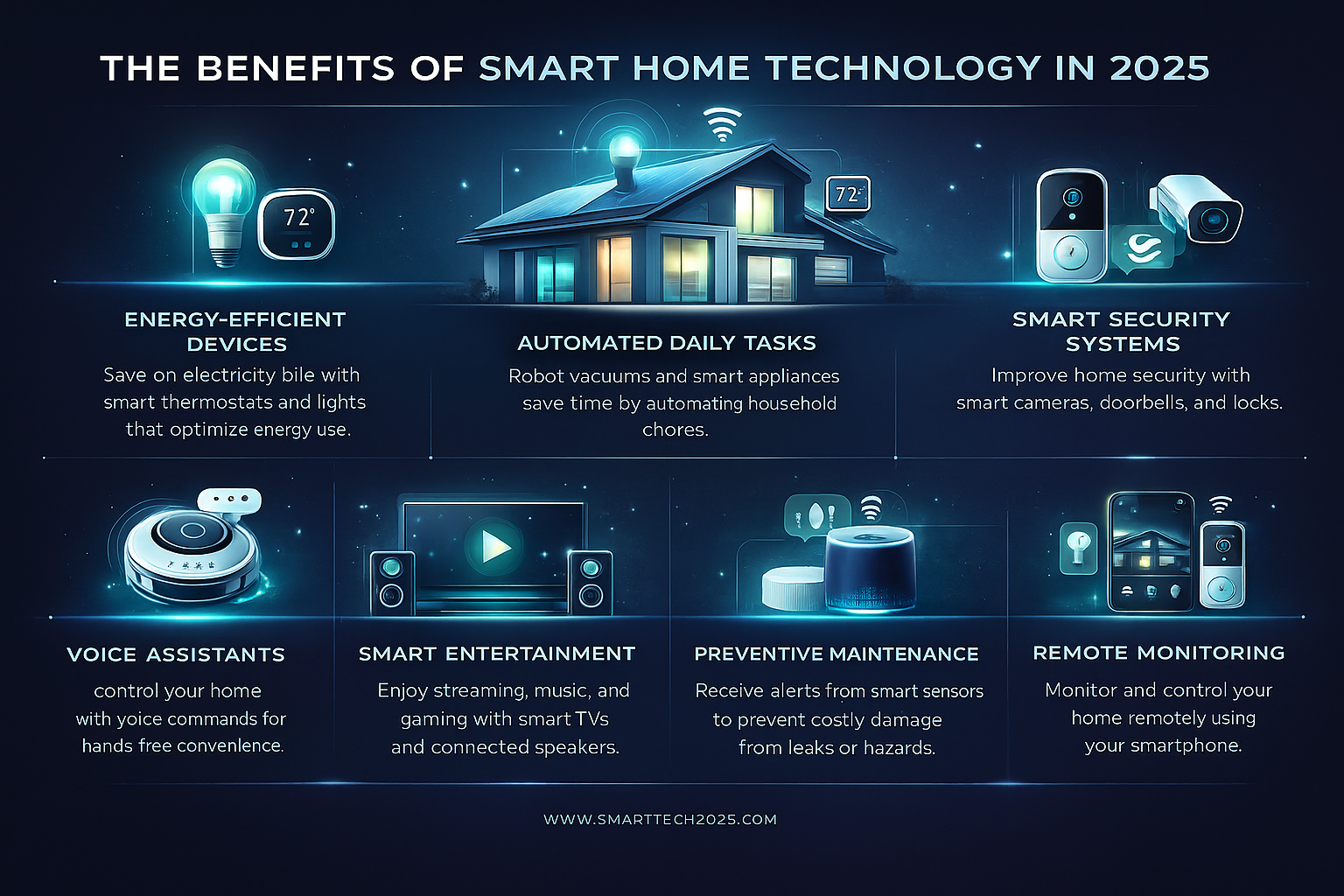
Smart home technology has quickly moved from luxury to necessity, transforming the way we live, work, and manage our homes. These devices, powered by artificial intelligence and automation, not only bring convenience and comfort but also help save both time and money. From energy management to security and everyday chores, smart home devices are designed to streamline daily life while reducing costs.
1. Energy-Efficient Devices Reduce Utility Bills
Smart thermostats, lights, and appliances adjust automatically based on usage and occupancy. For example:
- Smart thermostats regulate heating and cooling efficiently, lowering electricity bills.
- Smart lighting systems turn off automatically when rooms are empty, saving energy.
- Energy-monitoring plugs help track and control electricity consumption.
By preventing unnecessary energy use, homeowners can save hundreds of dollars annually while reducing their carbon footprint.
2. Automated Daily Tasks Save Time
Smart home devices automate routine tasks, freeing up your time for more important activities. Examples include:
- Robot vacuums and mops that clean floors on a schedule.
- Smart coffee makers that brew coffee before you wake up.
- Smart irrigation systems that water your garden automatically.
Automation eliminates repetitive chores, allowing homeowners to focus on work, hobbies, or family.
3. Smart Security Systems Prevent Financial Loss
Home security devices like smart cameras, doorbells, and alarms offer real-time monitoring and alerts. Benefits include:
- Preventing theft or damage to property.
- Reducing insurance premiums with verified security measures.
- Allowing remote monitoring, so you can address issues instantly.
Investing in smart security not only saves money in the long term but also provides peace of mind.
4. Voice Assistants Streamline Home Management
Devices like Amazon Echo, Google Nest, or Apple HomePod allow hands-free control over home systems. You can:
- Turn lights, fans, and appliances on/off using voice commands.
- Set reminders and schedules efficiently.
- Control smart devices even when away from home.
Voice assistants save time by eliminating manual adjustments and help manage multiple devices seamlessly.
5. Smart Entertainment Saves Both Money and Hassle
Smart TVs and connected speakers allow you to stream content efficiently and reduce unnecessary subscriptions. Features like:
- Scheduling recordings to avoid missing shows.
- Consolidating streaming platforms for cost savings.
- Integrating with other smart devices for voice control.
These tools reduce wasted time searching for entertainment and help optimize monthly spending on media.
6. Preventive Maintenance with Smart Sensors
Smart home sensors can detect leaks, smoke, or extreme temperatures before they cause damage. Benefits include:
- Preventing costly repairs from water leaks or fire hazards.
- Alerts for appliance malfunctions before breakdowns occur.
- Monitoring indoor air quality to prevent health issues.
By catching issues early, smart sensors save thousands in repairs and healthcare costs.
7. Remote Monitoring Saves Travel & Utility Costs
Smart devices allow homeowners to manage their home remotely:
- Adjust thermostat and lighting when away to save energy.
- Monitor security cameras while on vacation.
- Control irrigation systems to avoid overwatering or under-watering.
Remote monitoring ensures you’re saving money even when not physically at home.
Conclusion
Smart home devices are more than a luxury—they are a smart investment that saves time, money, and energy while improving quality of life. From energy-efficient appliances and automated chores to security systems and preventive maintenance, these devices streamline daily routines, reduce costs, and provide peace of mind. By adopting smart technology, homeowners can enjoy a more efficient, secure, and cost-effective lifestyle in 2025 and beyond.