
There is a moment that people who have experienced genuine luxury travel describe in very similar ways. It is not the moment the private jet lands or the moment the villa door opens to a view of the sea. It is quieter than that. It is the moment you realise that everything that would normally require your attention has been quietly taken care of before you even thought to ask. The itinerary is arranged. The table is reserved. The luggage is already in the room. The car is waiting exactly where it needs to be. Someone anticipated what you would need before you needed it and made it happen without any fuss or fanfare.
That feeling is what luxury travel is really about. Not the thread count of the sheets, though that matters. Not the Michelin stars at dinner, though that is wonderful. The core of the luxury travel experience is the elimination of friction. The removal of everything that requires effort, planning, waiting, or compromise from the experience of being somewhere remarkable in the world.
Luxury travel has grown significantly as a category and has also changed significantly in what it means to the people who pursue it. The old model of luxury, which was primarily about display and status, about being seen in the right places with the right labels and the right level of conspicuous expense, has given way to something more personal and in many ways more interesting. The luxury travellers of today are increasingly interested in genuine, exclusive experiences that they cannot easily replicate. They want access to places, people, and moments that money can arrange but that are genuinely rare rather than just expensive.
This blog is going to explore luxury travel honestly and thoroughly. What it actually means in the current era, what defines genuine luxury at every stage of a trip, the destinations that offer the most remarkable luxury experiences, how the industry is changing, and what to look for when you are investing in travel at this level.
Redefining Luxury: What It Means Today
The definition of luxury travel has shifted substantially over the past decade and understanding the shift matters for anyone who wants to engage with the category meaningfully rather than just expensively.
The traditional markers of luxury travel were largely about product specifications. The size of the hotel suite. The number of stars in the hotel rating. The class of your airline seat. The brand recognition of the properties you stayed in. Luxury was something you could display and compare. It had visible, legible codes that communicated status to anyone who understood the reference points.
The luxury travellers of today, particularly the most sophisticated ones, have moved away from this display model toward something that is harder to photograph but more genuinely satisfying. They are looking for exclusivity in the sense of genuine rarity rather than just expensive scarcity. They want experiences that are not available to everyone regardless of budget. They want personal service that feels genuinely personal rather than scripted. They want the opportunity to see, do, and experience things that the general tourist market cannot access.
This shift has produced some of the most interesting developments in luxury hospitality in decades. Private access to cultural monuments outside of opening hours. Dinners prepared by notable local chefs in private, non-public settings. Exclusive wildlife encounters arranged with genuine conservation credentials rather than just staged proximity to animals. Meetings with artisans, practitioners of traditional arts, and experts in subjects the traveller is genuinely interested in. Travel that educates and enriches rather than simply impresses.
The other significant shift in luxury travel is toward personalisation. The luxury hotel that provides the same experience to every guest is no longer the apex of the category. The properties and service providers that have invested in genuinely knowing their guests, understanding their individual preferences and requirements before they arrive, and tailoring every element of the experience to the specific person rather than to a generic idea of what a luxury traveller wants, are the ones winning in the current market.
Getting There: Luxury in the Air
The flight experience is where many luxury trips begin and where the contrast between standard and premium travel is most immediately apparent. For many long-haul travellers, the quality of the journey to the destination matters as much as the destination itself, and luxury aviation has produced some remarkable products over the past decade.
Business class on leading airlines has reached a level of genuine comfort that earlier generations of air travellers would have found extraordinary. Lie-flat beds have become standard in premium long-haul cabins. Private suites with closing doors have been introduced by several leading carriers. Noise-cancelling headphones, high-quality entertainment systems, genuinely good food and drink, and attentive service that feels unhurried, all of this is available on the best business class products in the world and makes a long-haul journey a restorative experience rather than an ordeal to be endured.
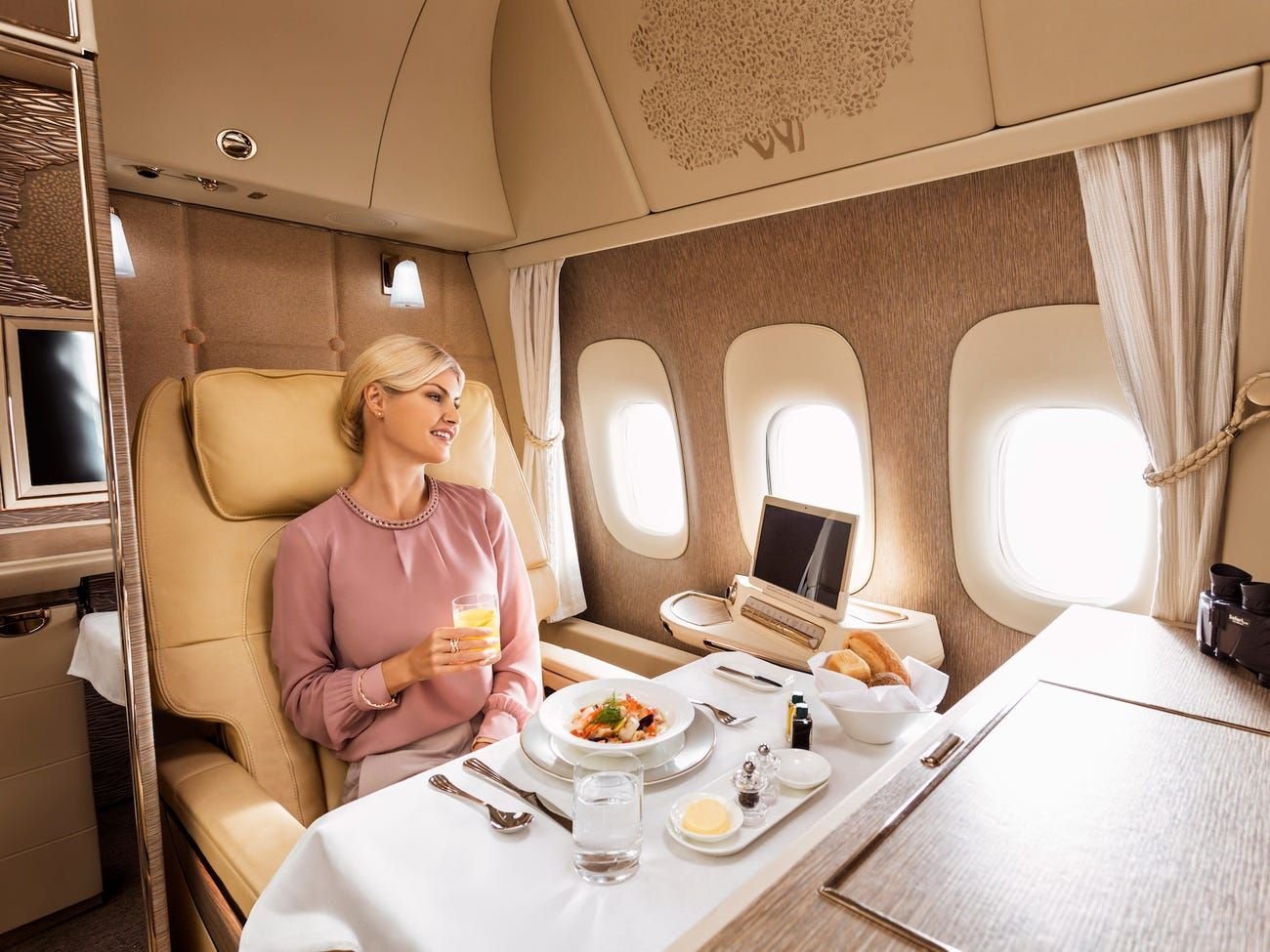
First class on the airlines that still maintain a distinct first class product, Emirates, Etihad, Singapore Airlines, Qatar Airways, and a handful of others, takes the flight experience to a level that has very little in common with the experience of flying economy on the same aircraft. Private suites with full doors, beds made up with linen, shower facilities on the A380, multi-course meals served with appropriate wines, and a cabin-to-crew ratio that allows genuinely attentive personal service create an environment that is closer to a very good hotel room than to a traditional aircraft cabin.
Private aviation is the most exclusive and most personalised form of air travel available and its usage has grown substantially among high-net-worth travellers who value the combination of time efficiency, privacy, and flexibility it provides. Flying privately eliminates airport queues, security lines, and the fixed schedule constraints of commercial aviation entirely. You depart when you are ready, from airports much closer to your origin, and land at airports much closer to your destination. The aircraft is yours and the experience aboard it is entirely yours. For travellers whose time is the most valuable resource and whose privacy is a genuine concern, private aviation is not a luxury in the decorative sense but a genuinely functional premium.
Charter options that allow access to private jet travel without the commitment of ownership or fractional programmes have made private aviation more accessible than it once was. Comparison platforms for private charter allow straightforward pricing and booking and the cost, while substantial, is not what most people assume when they first encounter it for certain routes and group sizes.
Where to Stay: The Art of Luxury Accommodation
Accommodation is where luxury travel investment is typically largest and where the quality difference between genuinely excellent and merely expensive is most clearly felt over the course of a stay.
The world’s great luxury hotels represent decades and sometimes centuries of accumulated expertise in hospitality. The Ritz in Paris, the Raffles in Singapore, the Taj Mahal Palace in Mumbai, the Aman properties across Asia and beyond, the Peninsula hotels in their various locations, these are institutions that have defined what luxury accommodation means in their respective markets. Staying in them is not just about the physical product, though the physical product is extraordinary. It is about being in a place that has been perfecting the art of looking after guests for a very long time and that shows it in a thousand small, unhurried ways.
The Aman resort brand deserves specific mention because it has perhaps done more than any other single brand to define the current model of luxury travel at its best. Aman properties are almost universally located in places of extraordinary natural or cultural significance. They are intentionally small, creating a sense of genuine exclusivity. They are designed to reflect and honour the architecture and landscape of their location rather than imposing an international hotel aesthetic. And they provide a level of service that is consistently described by guests as the most personal and most genuinely attentive they have encountered anywhere.
The rise of private villa rentals as a luxury accommodation model has been one of the most significant trends in the category over the past decade. Renting an entire villa, whether a cliff-top property in Santorini, a riverside estate in Rajasthan, a beach villa in the Maldives, or a manor house in the English countryside, provides a level of privacy, space, and personalisation that even the finest hotel cannot match. A private villa with a dedicated staff, your own pool, your own kitchen and chef, and the freedom to come and go entirely on your own schedule is a fundamentally different experience from sharing a hotel with hundreds of other guests.
Boutique luxury properties, often independently owned, are where some of the most interesting luxury accommodation experiences are currently happening. Small, intensely designed, highly personal hotels that reflect the vision and taste of their owners rather than a brand standard deliver something that large chain luxury hotels sometimes find harder to replicate. The twenty-room property in a restored heritage building, with an owner who personally curates the experience and ensures that every guest feels individually known and individually valued, can provide a luxury experience that no amount of corporate investment can quite manufacture.
In India specifically, the palace hotel category represents something genuinely unique in world luxury hospitality. The palaces of Rajasthan converted to hotels, the royal properties of Kerala and Karnataka, the heritage havelis of Gujarat and Rajasthan, offer the combination of extraordinary architecture, genuine historical significance, impeccable service, and the particular atmosphere that comes from being in a building whose walls contain centuries of story. The Taj Lake Palace in Udaipur, the Umaid Bhawan in Jodhpur, the Rambagh Palace in Jaipur, these are not just hotels with heritage aesthetics. They are living heritage in which guests are temporary residents.
Dining: When Food Becomes an Experience
Dining at the luxury travel level is about more than the quality of the food, though genuinely exceptional cooking is the foundation. It is about the combination of setting, service, and culinary skill that creates a meal as a complete, memorable experience rather than simply as sustenance.
The world’s best restaurants, the establishments that attract the most serious food travellers, share certain characteristics that go beyond their culinary reputations. They offer intimacy. The number of covers is small enough that every table receives the full attention the experience deserves. They offer storytelling. The best fine dining tells a coherent story about a cuisine, a place, a season, or a philosophy through the progression of courses. And they offer service that is knowledgeable, attentive, and warm without being stiff or formal in ways that create distance rather than connection.
Private dining experiences have grown in appeal among luxury travellers as an alternative to restaurant dining. Arranging a private dinner in a setting that has personal meaning, on a terrace overlooking a view you have come to love, in a space within a heritage property that is not usually open to guests, in a clearing in a remarkable natural landscape, prepared by a chef who works with the local ingredients and the local culinary tradition of the place you are visiting, creates a dining memory that a restaurant setting cannot replicate.
Food and wine experiences as travel itinerary elements have become a significant part of luxury travel. A morning at a family vineyard in Burgundy with a proper tasting guided by the winemaker. A cooking class with a prominent local chef followed by a meal of what you prepared. A private tour of a spice market with a guide who knows the traders personally, followed by a meal in a home kitchen. A truffle hunt in the early morning forests of Umbria. These experiences place food and the culture around it at the centre of the travel experience rather than treating dining as a peripheral activity that happens between the main sightseeing.
Experiences: The New Definition of Luxury
If there is one area where the definition of luxury travel has changed most dramatically, it is in the category of experiences. The idea that the most valuable thing money can arrange in travel is a very comfortable room or a very good meal has given way to the understanding that the most valuable thing money can arrange is access. Access to places, people, and moments that are genuinely rare.
Private access to major cultural attractions outside of public hours is one of the most sought-after luxury travel experiences available. Having the Sistine Chapel to yourself at dawn, before the tourist crowds arrive. Walking through the Palace of Versailles with a private guide after closing time when the corridors and galleries are quiet. A private tour of the Amber Fort in Jaipur with a historian who knows the building’s stories at a level that no general tour guide can provide. These experiences do not just produce better conditions for seeing remarkable things. They produce a fundamentally different quality of engagement with those things.
Wildlife experiences at the luxury level are defined by the combination of genuine proximity to remarkable wildlife, the expertise of the guides who facilitate the encounter, the comfort of the bases from which the experience is conducted, and the conservation credentials of the operation. The best luxury safari operations in Africa and India are genuinely contributing to the conservation of the ecosystems and the wildlife they provide access to. Choosing them is not just a luxury purchase. It is a conservation investment.
Cultural immersion experiences arranged specifically for individual travellers or small groups provide access to the living culture of a destination in ways that standard tourism cannot. A private audience with a master of a traditional art form. Participation in a ceremony or festival as a genuine guest rather than as a spectator. A guided exploration of a neighbourhood with someone who grew up there and whose knowledge of it goes many generations deep. An evening in a private home experiencing the hospitality of a family whose ancestors have been in the same place for centuries. These are the experiences that luxury travellers describe as the most valuable of everything their travel budget provides.
Wellness has become a central element of luxury travel for a growing proportion of travellers who value the opportunity to invest in their physical and mental health alongside the more traditional pleasures of luxury. The most serious luxury wellness retreats provide genuinely transformative experiences rather than simply high-end spa facilities. Ayurvedic treatments at a serious Kerala ayurveda centre, conducted by practitioners with genuine expertise and aligned with a programme designed specifically for the individual guest, is a very different experience from a spa treatment at a luxury hotel. Meditation and yoga retreats in locations chosen for their capacity to facilitate genuine inner quiet produce a quality of restoration that the best hotel room in the world cannot replicate.
Luxury Travel in India: A Category With No Equal
India offers luxury travel experiences that exist nowhere else in the world and that have been steadily gaining the recognition they deserve among international luxury travellers who previously focused primarily on European and Asian destinations.
The Maharajas Express, one of the world’s great luxury train journeys, crosses Rajasthan and central India in carriages that combine genuine Rajasthani aesthetic richness with every modern luxury. The experience of travelling between the great cities of Rajasthan, Jaipur, Udaipur, Jodhpur, Varanasi, in a private cabin on a beautifully designed train, with meals of exceptional quality and shore excursions arranged with the same care as the train itself, is unique to India and is regularly cited among the world’s finest travel experiences.
The luxury houseboat experience in Kerala’s backwaters provides a way of experiencing one of India’s most beautiful landscapes that cannot be replicated anywhere else. A privately chartered premium houseboat, with a dedicated crew, a cook who prepares genuinely excellent Kerala cuisine from fresh local ingredients, and the quiet rhythm of moving through the network of canals and lakes at a pace that allows the landscape and the life along the water to actually register, is a deeply restorative experience that the most sophisticated international travellers seek out specifically.
Tiger safari in the luxury camps and lodges adjacent to the great tiger reserves of India, Ranthambore, Bandhavgarh, Kanha, and Pench, combines genuine wildlife experience with accommodation that is extraordinary in its own right. The best luxury camps use natural materials, local craft, and deep environmental sensitivity to create a living environment that feels genuinely of the place rather than imposed upon it. Waking before dawn to drive into the forest in the company of a skilled naturalist, emerging into a clearing where a tiger is sitting completely indifferent to your presence, and then returning to a camp where breakfast is waiting and the morning light is spectacular on the landscape, is an experience that justifies the journey from anywhere in the world.
What to Look for When Booking Luxury Travel
Given the significant investment that luxury travel represents, understanding what distinguishes genuinely excellent providers from merely expensive ones is practically important.
Genuine personalisation before arrival is one of the clearest indicators of a luxury provider that is serious about the experience it delivers. Providers who make contact before your arrival, ask specific questions about your preferences, requirements, and interests, and use the answers to genuinely customise your experience are demonstrating the level of care that the luxury price point should include. Providers who treat every guest identically regardless of what they have communicated about their preferences are selling an expensive standardised product rather than genuine luxury.
The quality and knowledge of guides and facilitators is often the single most variable element of the luxury travel experience and the one that most determines whether an itinerary is genuinely transformative or just expensive. A knowledgeable, passionate, and personally engaged guide can make a moderately priced experience exceptional. A disengaged guide with limited knowledge makes even the most expensive experience feel hollow. Asking specifically about the guides and facilitators involved in experiences, requesting biographical information, and choosing providers who are selective about who they use in these roles is worth the additional effort.
Genuine local relationships are what allow luxury travel providers to deliver the experiences of access that define the category at its best. The private dinner at a location that is normally closed to visitors, the meeting with the craftsman or cultural figure who is not normally accessible to tourists, the table at the restaurant that had no availability, all of these require relationships built over time by providers who are genuinely embedded in the communities and places where they operate. This is something that cannot be faked and that distinguishes the best luxury travel providers from those who simply charge more for standard experiences.
Conclusion
Luxury travel at its best is one of the most genuinely enriching uses of both time and money available to the people who have the means to pursue it. When it is done well, it provides not just comfort and privilege but access to experiences, places, and moments of genuine rarity and beauty that expand the understanding of what the world contains and what human culture and natural environment are capable of producing.
The things that make luxury travel genuinely valuable are not primarily the things that are most visible or most easily compared on a spreadsheet. They are not the square footage of the suite or the vintage of the champagne. They are the quality of the attention paid to your individual experience before and during your trip. They are the expertise and the passion of the people who facilitate your encounters with remarkable places and remarkable things. They are the access to the genuinely rare, the genuinely beautiful, and the genuinely personal that money, when spent wisely with the right providers, can arrange.
The destinations that deliver the most remarkable luxury experiences reward travellers who approach them with genuine curiosity rather than simply an appetite for confirmation that they are being treated at the highest level. The palace hotel in Udaipur, the private camp on the edge of a tiger reserve, the houseboat moving through the backwaters of Kerala, the private villa overlooking the ancient landscape of Rajasthan at sunset, these are not backdrops for luxury consumption. They are places with depth and meaning that respond to the quality of attention you bring to them.
Invest in genuine expertise when you are planning luxury travel. Work with providers who have real knowledge of and real relationships in the places they take you. Prioritise experiences over objects and personalisation over standardised premium product. Be specific about what genuinely matters to you and communicate that clearly so that the people designing your experience can respond to you as an individual.
Luxury travel is an extraordinary privilege. When it is approached with the seriousness and the genuine curiosity it deserves, it returns that investment with experiences that remain vivid and meaningful for decades. The world’s most remarkable places, its most extraordinary cultures, its most breathtaking landscapes, and its most moving examples of human creativity and ingenuity are all more accessible to the luxury traveller than to almost anyone else.
That access is worth something profound. Use it well and let it give you back more than the money you spent on it. The best luxury travel always does.