
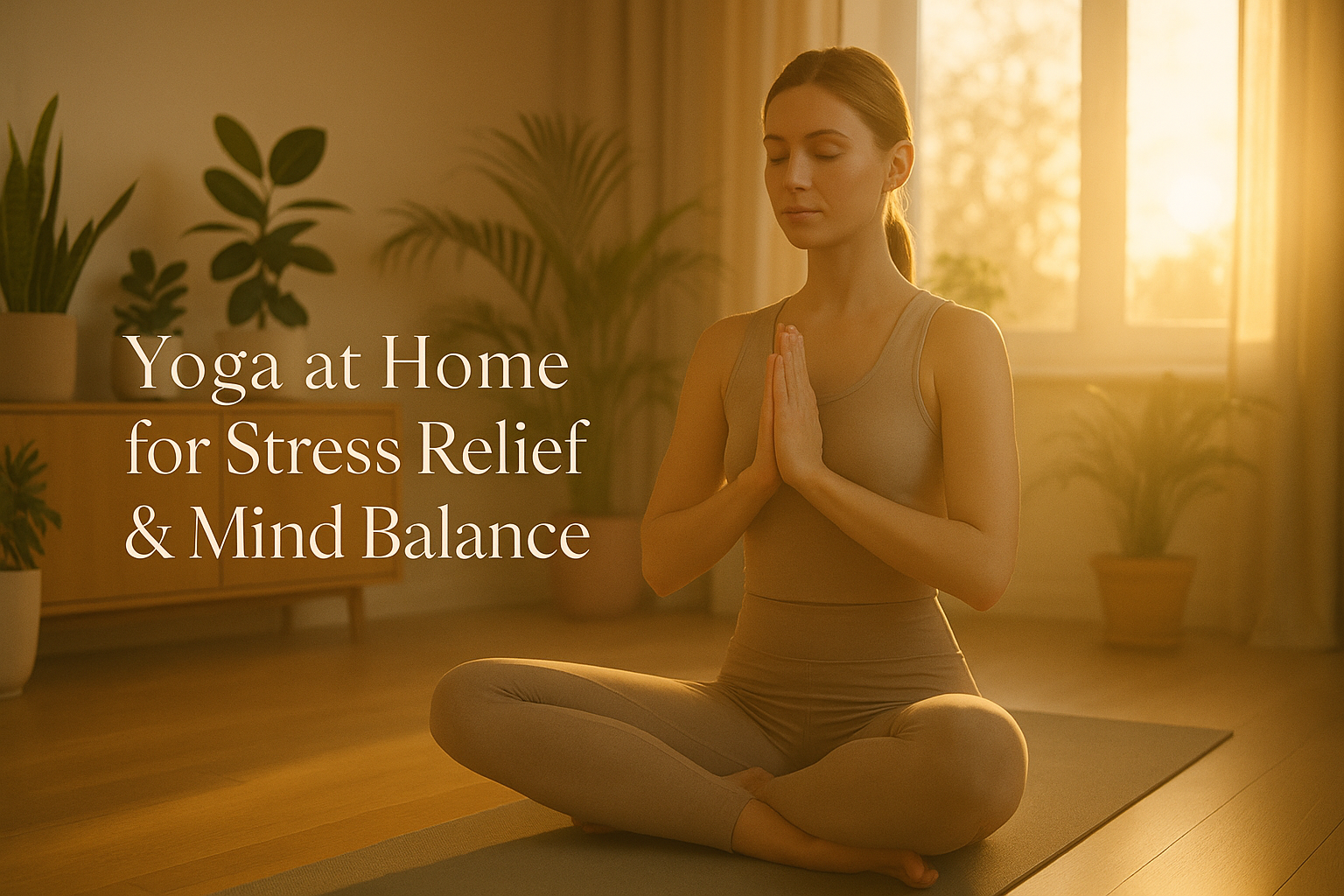
Yoga is one of the oldest practices in the world, combining physical postures, breathing techniques, and meditation to promote overall health. In today’s busy lifestyle, practicing yoga at home is not only convenient but also highly effective for reducing stress, improving flexibility, and boosting mental clarity.
Whether you’re a complete beginner or someone returning to fitness, you can start yoga at home with minimal equipment and still reap its benefits.
✅ Why Practice Yoga at Home?
-
Convenience: No commuting to classes, you can practice anytime that suits your schedule.
-
Cost-effective: No membership fees — a yoga mat and a few online resources are enough.
-
Privacy: Beginners can feel comfortable practicing at their own pace without comparing themselves to others.
-
Consistency: Practicing at home makes it easier to establish a regular routine.
Even 20–30 minutes of daily yoga at home can significantly improve your physical and mental well-being over time.
🧘 Basic Equipment Needed
-
Yoga mat: Provides grip and cushioning.
-
Comfortable clothing: Stretchable, breathable clothes are best.
-
Optional props: Yoga blocks, straps, or cushions can support flexibility and balance.
That’s it — no expensive equipment is needed to start a consistent practice.
✅ Beginner-Friendly Yoga Poses
Here are some easy yoga poses to start at home:
1. Mountain Pose (Tadasana)
-
Stand tall with feet together, shoulders relaxed, and arms at your sides.
-
Take deep breaths and focus on your posture.
-
Improves posture, strengthens legs, and increases body awareness.
2. Downward-Facing Dog (Adho Mukha Svanasana)
-
Start on hands and knees, lift hips toward the ceiling, forming an inverted V.
-
Keep spine straight and heels moving toward the floor.
-
Stretches the hamstrings, calves, and spine; relieves tension in the back.
3. Cat-Cow Stretch (Marjaryasana-Bitilasana)
-
On hands and knees, alternate between arching your back (cow) and rounding it (cat).
-
Enhances spinal flexibility and warms up the body.
4. Child’s Pose (Balasana)
-
Kneel on the floor, sit back on your heels, and stretch arms forward on the mat.
-
Helps relax the back, shoulders, and mind.
5. Cobra Pose (Bhujangasana)
-
Lie on your stomach, palms under shoulders, gently lift chest while keeping lower body grounded.
-
Strengthens spine, opens chest, and improves breathing capacity.
6. Seated Forward Bend (Paschimottanasana)
-
Sit with legs extended, reach forward to touch toes while keeping the spine straight.
-
Stretches hamstrings, lowers stress, and improves digestion.
✅ Breathing & Mindfulness
Breathing is central to yoga. Beginners can start with:
-
Deep belly breathing: Inhale deeply through the nose, expanding the abdomen, and exhale slowly.
-
Alternate nostril breathing (Nadi Shodhana): Balances mind and body, reduces stress, and improves focus.
Combining postures with proper breathing enhances relaxation and maximizes the benefits of yoga.
✅ Tips for Practicing Yoga at Home
-
Start small: Begin with 15–20 minutes daily and gradually increase duration.
-
Consistency matters: Practice regularly rather than doing long sessions sporadically.
-
Focus on form: Proper posture reduces the risk of injury and ensures maximum benefits.
-
Use online resources: Beginner-friendly videos or apps can guide you through sequences.
-
Listen to your body: Don’t push yourself — yoga is about gentle improvement, not competition.
-
End with relaxation: Always finish with a few minutes in Savasana (Corpse Pose) to absorb benefits.
🔹 Benefits of Home Yoga
-
Reduces stress and anxiety — yoga calms the mind and regulates emotions.
-
Improves flexibility and strength — gentle stretches improve muscle tone and joint mobility.
-
Boosts energy and immunity — regular practice enhances circulation and overall vitality.
-
Promotes better sleep — relaxing poses and mindful breathing improve sleep quality.
-
Encourages self-discipline — daily practice builds focus and routine.
🔚 Conclusion
Starting yoga at home is simple, effective, and accessible for everyone. With just a mat, some space, and consistent practice, beginners can experience improved flexibility, strength, mental clarity, and stress reduction.
Remember, yoga is not a competition — it’s a personal journey toward wellness and balance. Start slow, stay consistent, and enjoy the transformation of your body and mind, one pose at a time.